Latest news
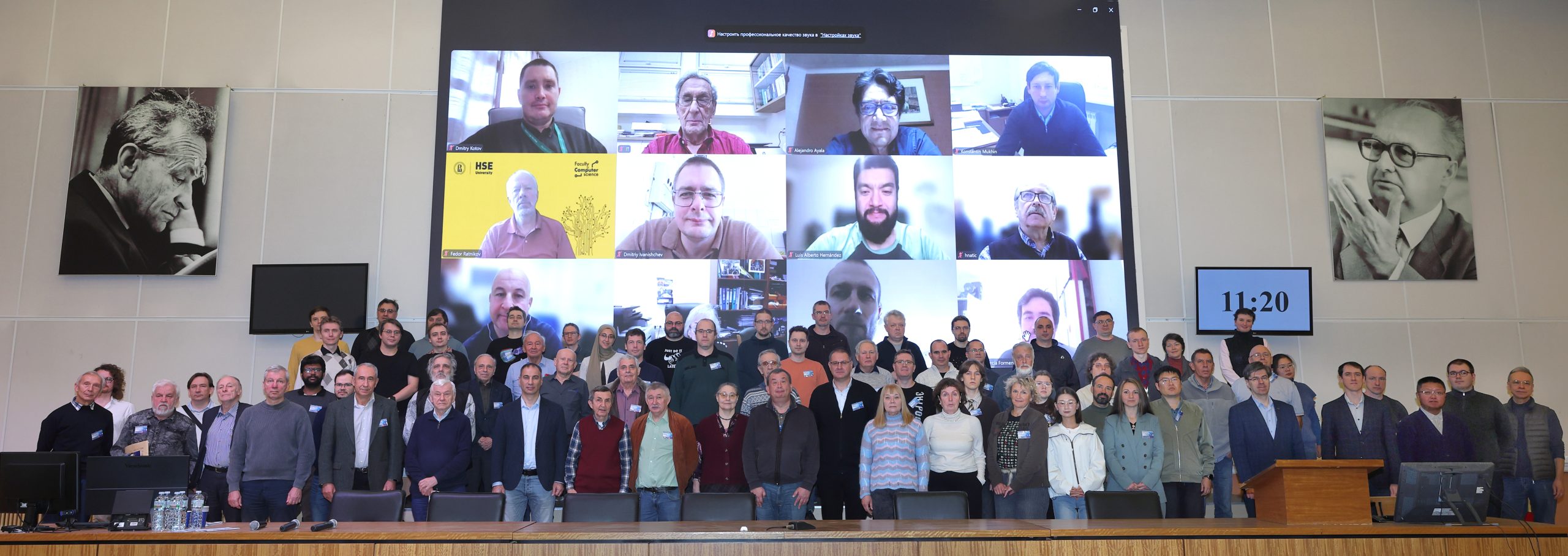
XVIII Collaboration Meeting of the MPD Experiment at NICA
20-22 Oct, 2026 https://indico.jinr.ru/event/6349 Talks: Status of the MPD software ACTS based TPC reconstruction with[…]
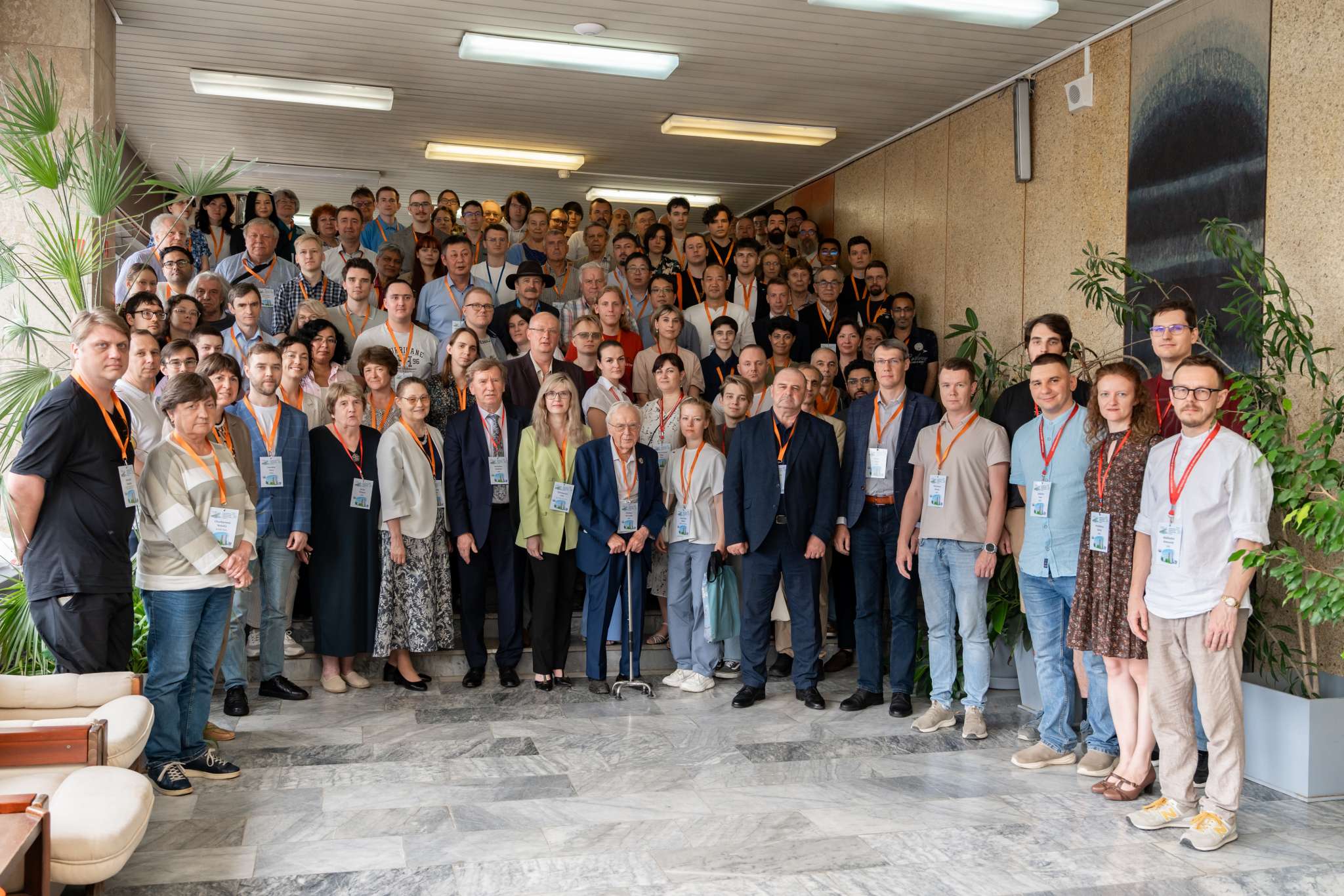
Mathematical Modeling and Computational Physics – MMCP’2026
22–26 Jun 2026 https://indico.jinr.ru/event/5789 Talks:Software Innovations in MPD: Advanced Modeling, Algorithmic Developments, and Ecosystem Modernization[…]
About MpdRoot
MpdRoot is the official offline software framework for the Multi-Purpose Detector (MPD) experiment at the NICA complex, Joint Institute for Nuclear Research (JINR). The framework is engineered to support the complete experimental lifecycle — from detector design, evaluation, and calibration to data storage and access. It aims for precise data reconstruction and analysis while providing the distributed computing infrastructure essential for the MPD physics program.
Framework
Built on the ROOT and FairRoot frameworks, MpdRoot employs a multi-layered architecture for the simulation, execution, and analysis of physics experiments. The system integrates the Geant-based Virtual Monte Carlo (VMC) interface, various event generator interfaces, and detector geometry management. All simulation and analysis tasks, including event display, are handled via interfaces managed by a central Run Manager. The architecture necessitates a complex, multi-level dependency base.
Visualization
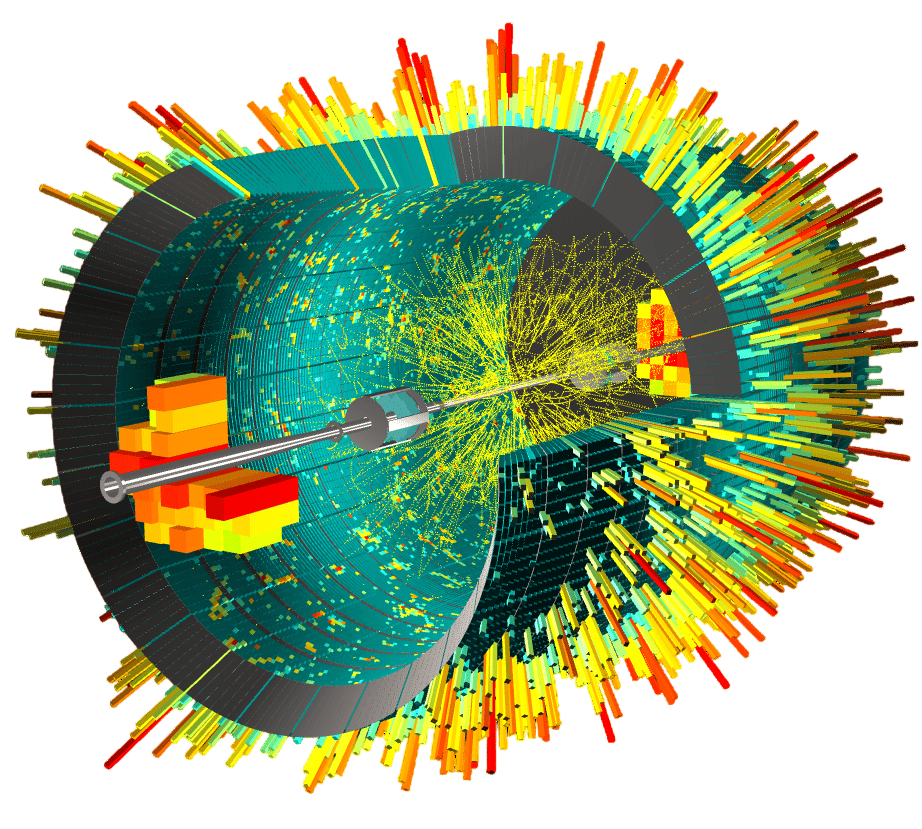
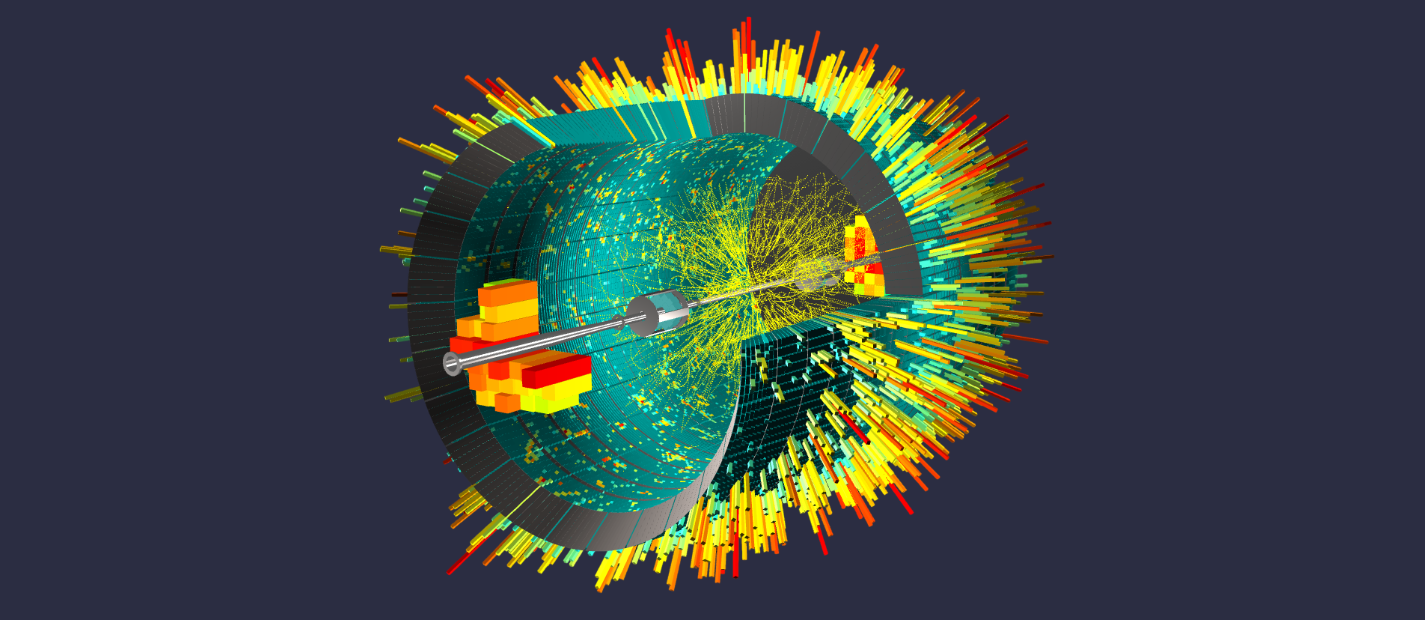
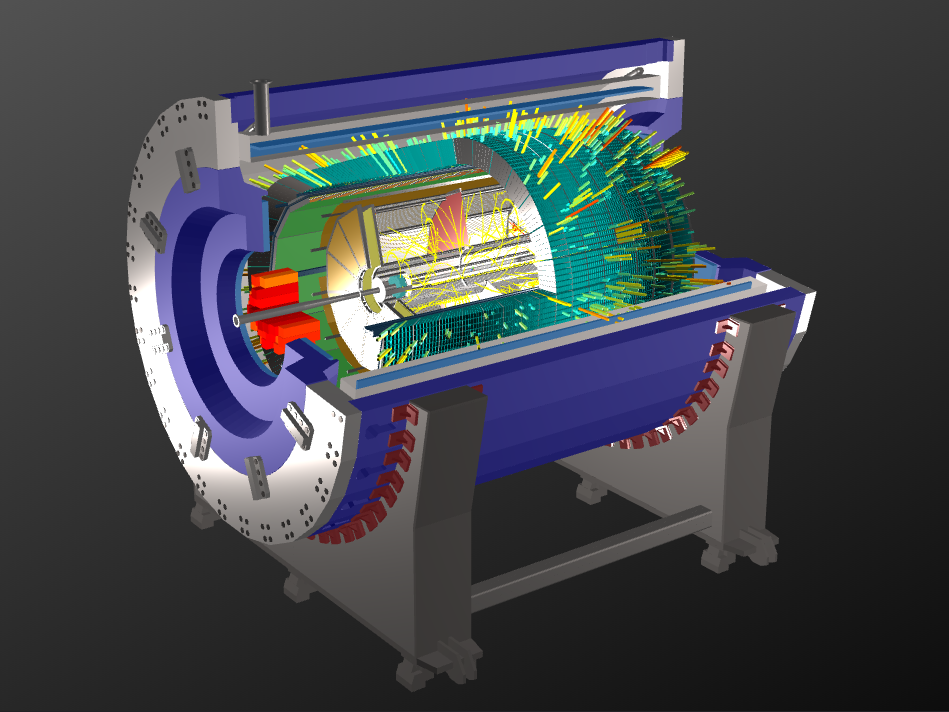
MpdRoot provides specialized tools for event navigation, inspection, and visualization. The MPD event display integrates Monte Carlo points and tracks with reconstructed hits, tracks, and detector geometry. A dedicated Event Manager facilitates navigation through the event tree, enabling precise filtering by energy, PDG codes, and other metadata.
Purposes
The framework’s aim is to manage the full data lifecycle of the MPD heavy-ion collision studies. Key capabilities comprise:
MPD simulation
Simulation of physics processes and detector response through Virtual Monte Carlo and event generators (e.g., UrQMD, Pythia).
Event reconstruction
Processing the raw electronic signals from the detector to reconstruct particle tracks, momentum, and collision vertices.
Physics Analysis
The framework is engineered to process large-scale datasets, projected at 100 PB, enabling the study of dense baryonic matter properties at MPD.
Visualization
Dedicated online event display for the 3D visualization of detector geometry, Monte Carlo simulations, and reconstructed particle tracks.
Software Development Team
Contacts
For questions and suggestions, please contact us
© 2026 MpdRoot